Responsive Menu
Add more content here...

Utility Network: Why Modern Utilities Are Rebuilding Their GIS Foundation

Dave Reed

Dave Reed

Senior Director, Professional Services

The Utility Network (UN) platform extends beyond system upgrades and represents a strategic transformation.  With an emphasis on utility infrastructure modernization to support increased demand, intermittent renewable energies, and real-time control of utility assets, Geographic Information System (GIS) platforms, like Esri’s UN GIS solution, are now expected to not only map and geo-locate assets but also to provide an accurate, detailed network connectivity.

Legacy GIS solutions have challenges in addressing current complex operational requirements, and many legacy GIS solutions are reaching the end of life.  As a result, utilities are reassessing their digital foundations, with many transitioning to the UN as the next phase in spatial network management and enhancing integrated enterprise systems.


This article launches a six-part series examining how utilities can effectively transition to the Esri UN.  It introduces the UN solution, highlights the key drivers behind this transition, and emphasizes how comprehensive, structured planning secures long-term benefits and successful end-user adoption.  Throughout the series, we will further explore the underlying architecture, migration challenges to avoid, planning frameworks, implementation strategies, and long-term optimization practices required to build a resilient and future-ready GIS environment.

The Pressure on Today’s Utilities Is Fundamentally Different

Utilities face a convergence of operational and technological demands:

  • Safety focus on the accurate representation of field assets
  • Integration with Outage Management Systems (OMS), Advanced Distribution Management Systems (ADMS), Enterprise Resource Planning (ERP), Engineering Analysis (EA), and Enterprise Asset Management (EAM) systems
  • Support for distributed generation
  • Regulatory reporting requirements
  • Field mobility and real-time updates
  • Increased expectations for reliability and resilience

Traditional GIS, particularly legacy geometric network models, is nearing the end of support, creating an opportunity for improvement with currently interconnected enterprise systems.  With early strategic planning, these improvements will lead to better management of real-time data, advanced analytics, and cross-team coordination.  Utilities increasingly recognize that this type of foundational shift can also deliver even more benefits, leading to enhanced efficiency, resilience, and agility.

What Is the Esri Utility Network?

The Esri UN represents the modern evolution of utility GIS architecture.  It is an advanced data model and network management framework designed to:

  • Support complex connectivity and topology
  • Enable real-time network tracing and analysis
  • Improve data validation and integrity
  • Scale across enterprise systems
  • Accommodate multi-domain utilities (electric, gas, water, telecom)

The UN introduces a service-based architecture that supports enterprise deployment and enhances business processes through web service integration and stringent network connectivity requirements.  This approach yields tangible benefits, including the ability to quickly access an accurate representation of the utility’s grid to support accelerated decision-making, increased operational reliability, and streamlined asset management.  The UN is not merely a technical upgrade; it represents a new paradigm for utilities to maximize value from their networked assets.

Why Utilities Are Moving to the Utility Network

The transition to the UN is motivated by a multitude of factors, including operational constraints, emerging demand on the network, and more importantly, the lack of ongoing support of legacy versions.

Limitations of a Legacy GIS

Many utilities face recurring challenges with older GIS frameworks, including:

  • Limited scalability
  • Inconsistent data validation
  • Manual topology corrections
  • Difficulty supporting complex networks and integrations
  • Non-standard implementations causing challenges with upgrading to the latest software versions
  • Increased technical debt due to extensive customizations that support business needs

As networks expand and infrastructure becomes increasingly interconnected, these limitations are further exacerbated.  Adopting the UN is not solely a technical decision; it constitutes an organizational and operational transformation.

Growing Operational and Integration Demands

Modern utility operations require seamless enterprise system integration to support data exchange between:

  • OMS
  • ADMS
  • Advanced Metering Infrastructure (AMI)
  • EA
  • EAM platforms
  • Mobile workforce applications
  • Analytics and reporting tools
Computer,Network

The UN provides a structured framework that delivers practical benefits, such as reducing data silos, enhancing visibility across departments, and enabling informed decision-making through integrated architecture.  For many organizations, transitioning to the UN is a strategic initiative to achieve these essential outcomes.

Implementing the Utility Network Is Not Just a Migration

A common misconception is that adopting the UN constitutes a straightforward technical migration. In reality, it involves a comprehensive strategy for:

  • Coordination, planning, and proper sequencing of events
  • Business needs and system assessment
  • Data readiness assessment
  • Data cleanup
  • Organizational alignment
  • Governance framework definition
  • Change management and enablement

Insufficient planning often leads to avoidable delays, increased costs, and rework during implementation, as well as impacts to other non-GIS implementation project schedules. Common UN migration challenges frequently stem from:

  • Lack of (or improper) project planning
  • Lack of understanding of technology solutions
  • Poor data quality
  • Undefined business rules
  • Misaligned stakeholder expectations
  • Incomplete documentation of existing workflows and network models

Successful implementations depend primarily on thorough preparation, which enables organizations to achieve benefits such as minimized disruptions, improved data quality, and smoother adoption. This approach ultimately enhances both immediate and long-term utility performance.

Why Planning Determines Implementation Success

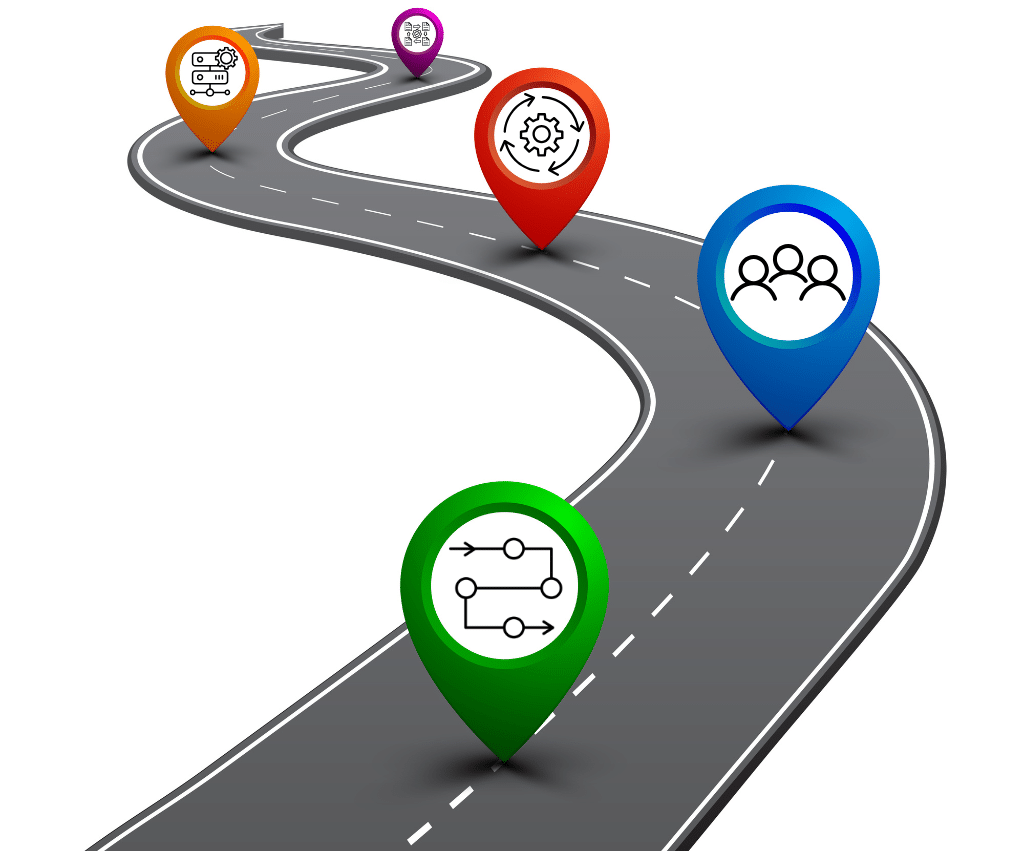
A structured UN roadmap provides clarity across five dimensions:

  1. Sequencing: Coordination of events to properly build, align, and test a complete working solution
  2. People: Stakeholder alignment, roles, and change management
  3. Process: Governance, workflows, and operational impact
  4. Technology: Architecture, integrations, and deployment model
  5. Data: Quality, completeness, and rule configuration
UN Blog 1_Roadmap Image

Data readiness constitutes a critical risk factor.  Legacy GIS environments frequently contain inconsistencies that may only become apparent during migration, and by addressing these issues early significantly reduces downstream disruptions.  Utilities that invest in structured assessments and phased planning consistently achieve smoother transitions and improved post-implementation performance.

How RAMTeCH Supports Utilities Through This Transition

RAMTeCH approaches UN transformations through not only technical expertise and strategic guidance, but with the utilities’ desired outcomes and future-state environment in mind.

We accomplish this by acting as a trusted advisor through:

  • Project planning and coordination
  • Assessment planning and requirements workshops
  • Business and IT architecture design
  • Structured data readiness assessments
  • Risk identification frameworks
  • Data validation methodologies
  • Phased migration strategies
  • Governance alignment support
  • Long-term managed services solutions

RAMTeCH approaches UN implementations as a continuous process, supporting clients throughout the entire lifecycle, from initial planning to enterprise integration(s) and sustained environment optimization.

This advisory-led model provides tangible benefits, including reduced uncertainty, improved risk management, and alignment of technology investments with operational objectives.  These outcomes enable utilities to achieve greater reliability, compliance, and performance improvements.

To learn more about how the UN is transforming operations—and why strategic planning is key to long-term success and user adoption, connect with one of RAMTeCH’s UN experts.

What’s Coming Next in This Series

This article introduces the strategic context of UN implementations. In the coming months, this series will explore:

  • A high-level overview of the Esri UN architecture
  • Real-world migration challenges utilities can proactively avoid
  • Building and defining a practical UN roadmap
  • Implementing the UN with control and governance
  • Sustaining performance and maximizing long-term value
What,Next,Word

The next article in this series will explore how the UN architecture provides improvements to legacy models, with a focus on advanced topology, multi-domain modeling, and differences from the geometric network.


Last Updated: April 29, 2026

Search

Search the website for more relevant content.

Share

Do you like this content? Why not share it on your social network, or send it to someone else.